.webp "WhatsApp Business API Message Templates")



This is a complete guide on what template messages are & how to create WhatsApp template messages easily using Getgabs.
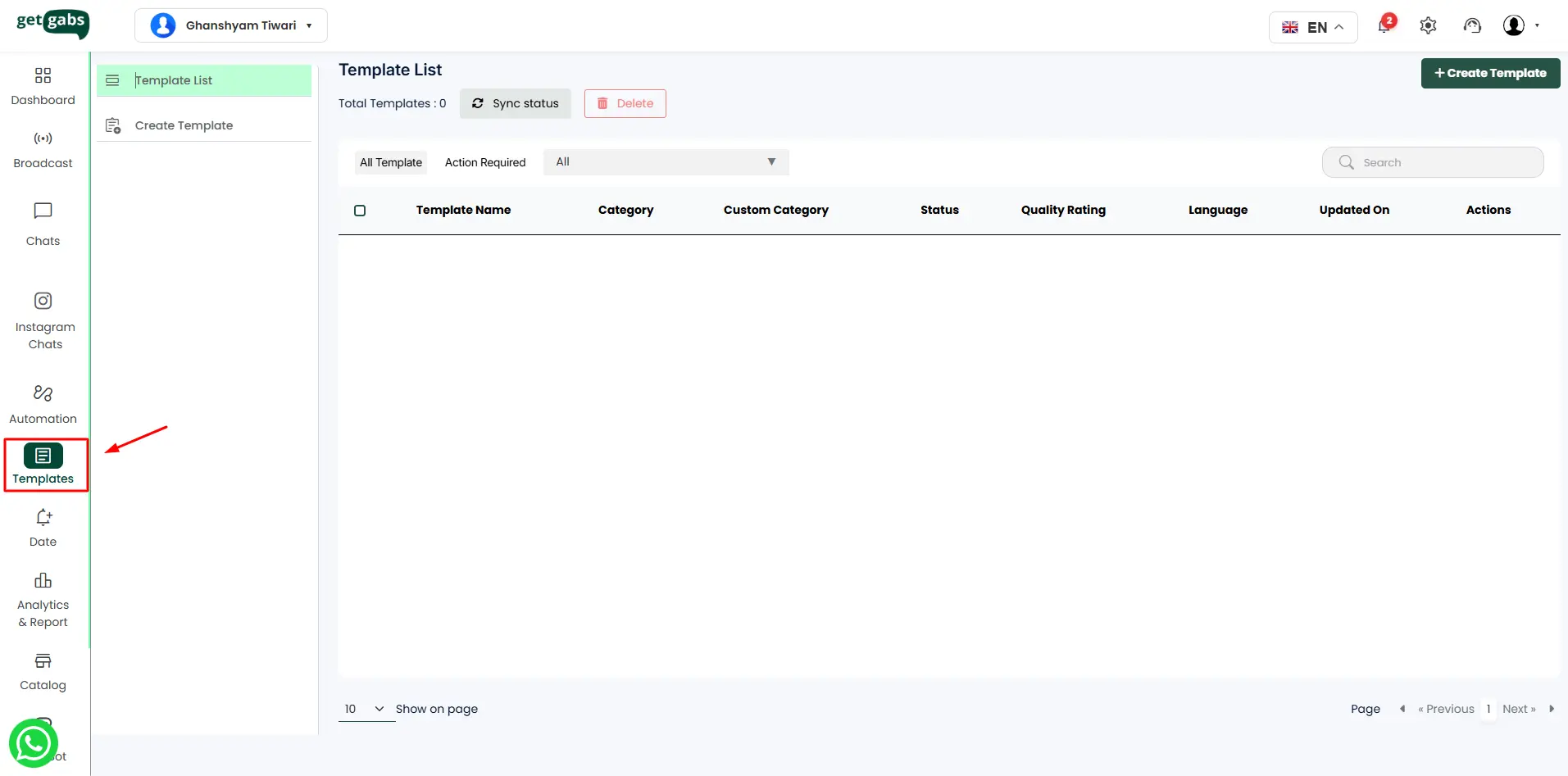
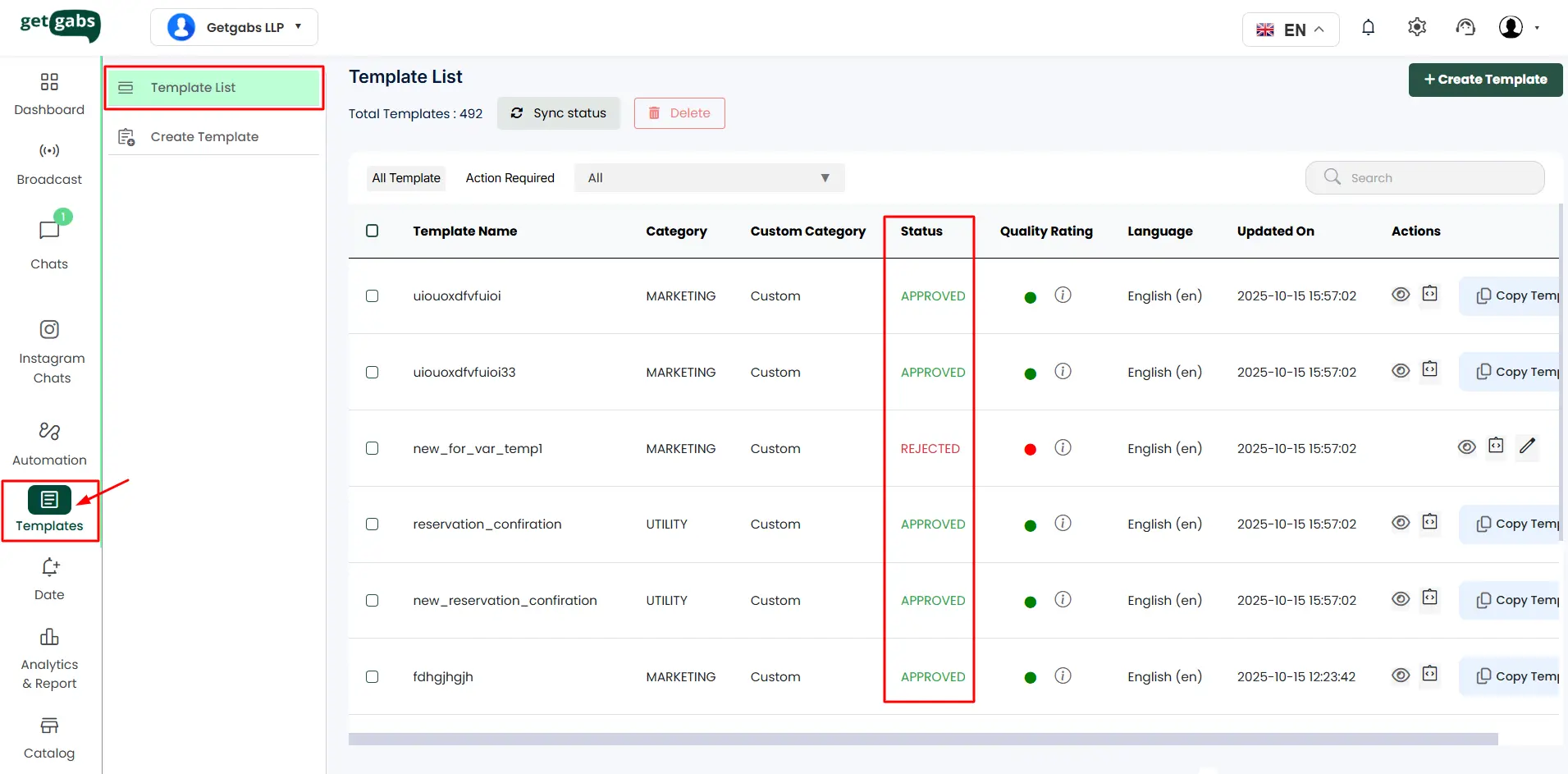
Step 1: To begin, you need to click on the “Templates” icon on the left side panel and click on “Create Template”.
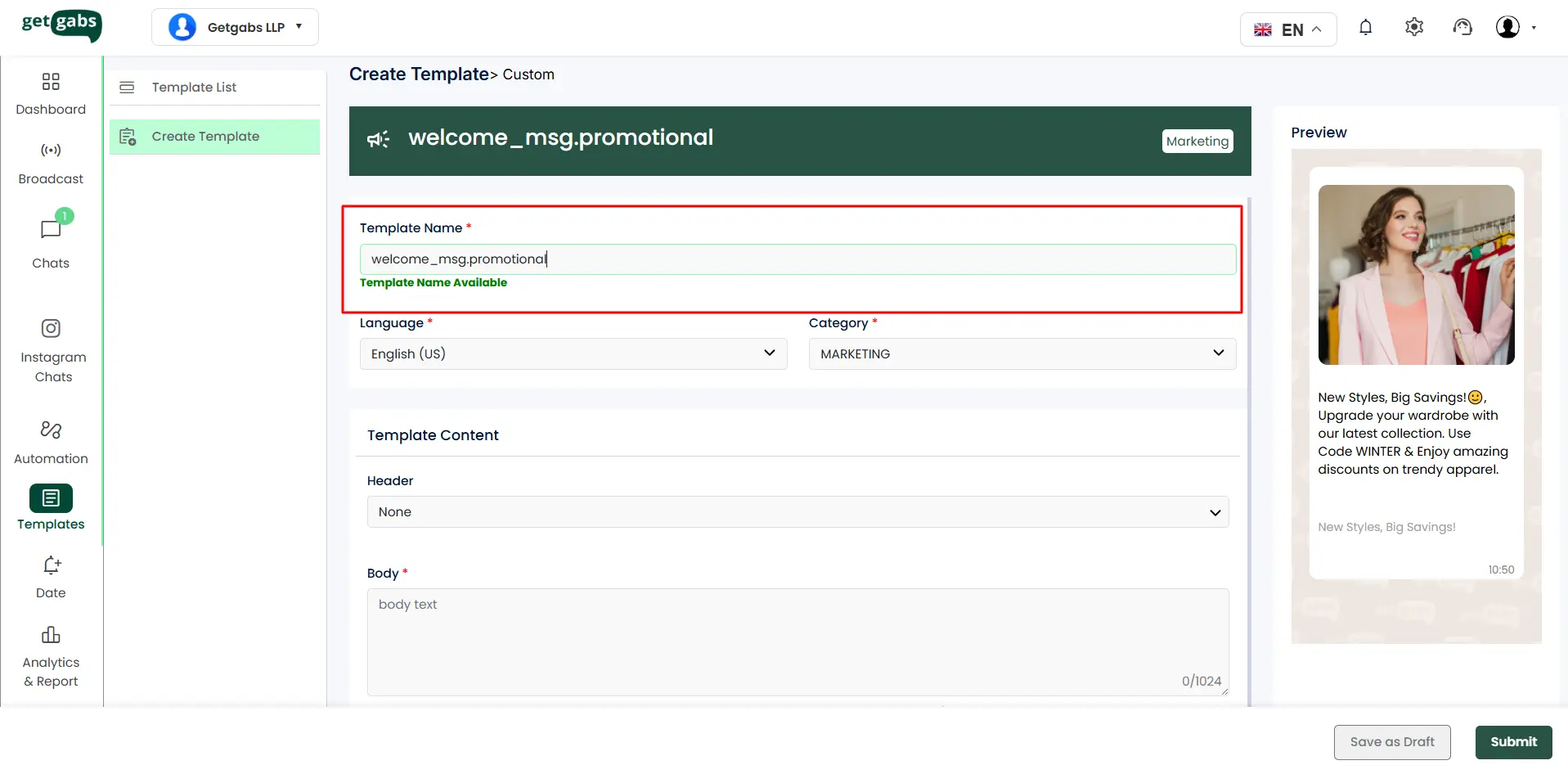
Step 2: Give a unique name to the template message. The message template name field is limited to a maximum of 512 characters, and it should be lowercase alphanumeric characters and can use underscores. This will only be visible to you only.
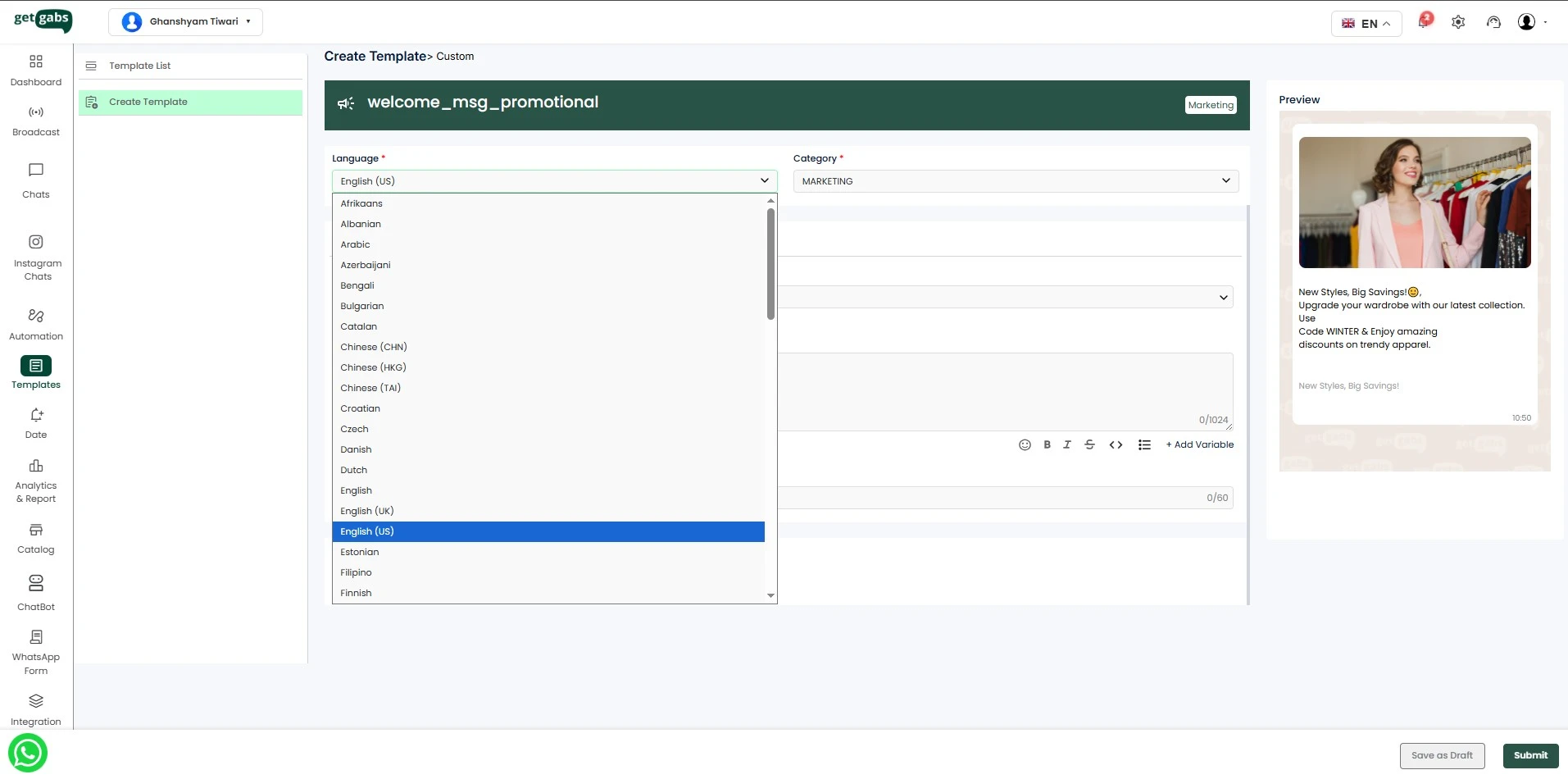
Step 3: Choose template message language according to your use case. WhatsApp supports 70+ languages like English, Hindi, Spanish, Bengali, Arabic, Telugu, and so on. English is the default Template Message language. For each template message, you can only pick one language.
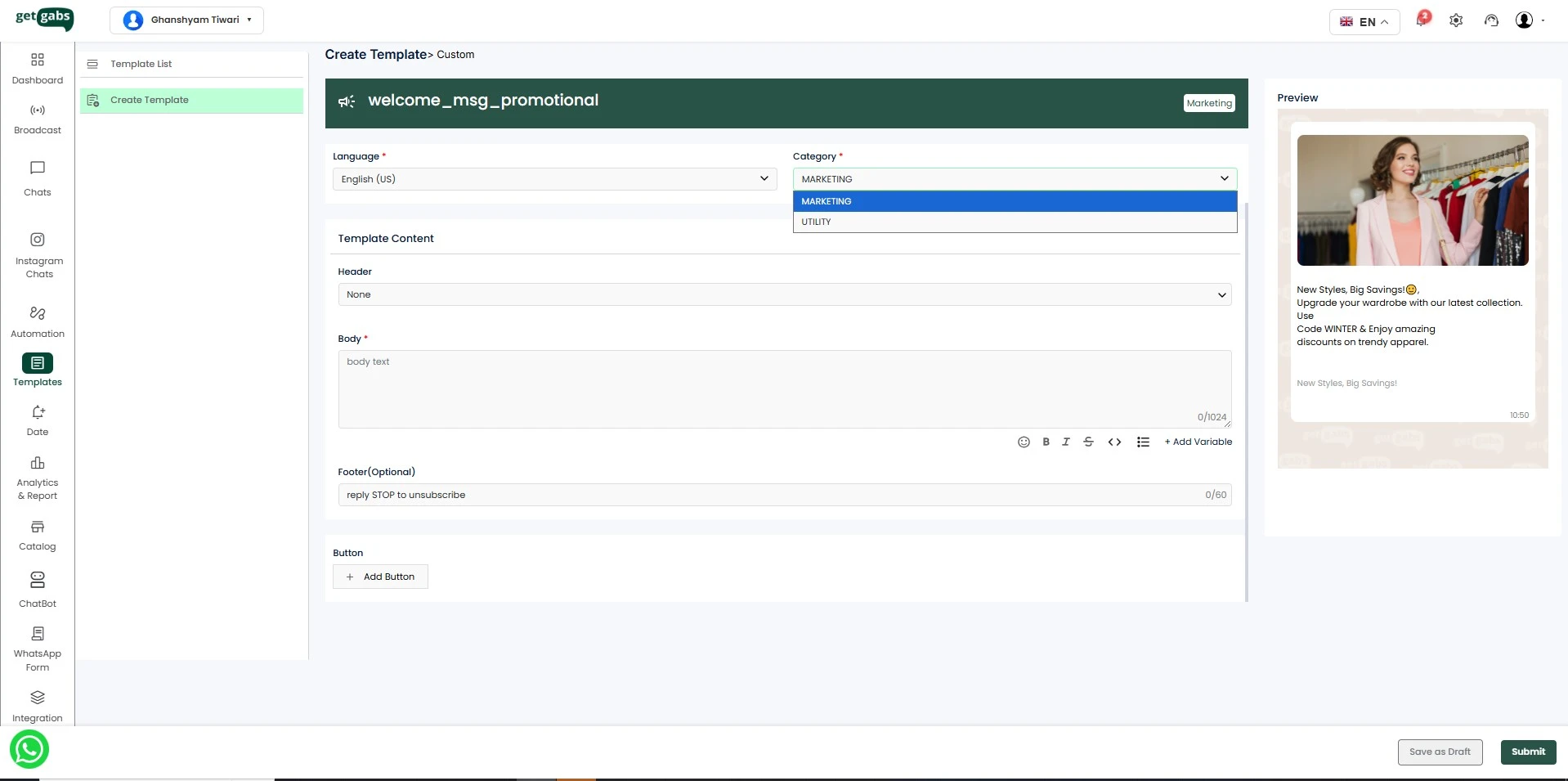
Step 4: Select Template Message Category from one of the following:
- Marketing — Enables you to achieve a wide range of goals, from generating awareness to driving sales and retargeting customers. Examples include new product, service, or feature announcements, targeted promotions/offers, and cart abandonment reminders.
- Utility — Enables you to follow up on user actions or requests. Examples include opt-in confirmation, order/delivery management (e.g., delivery update), account updates or alerts (e.g., payment reminder), or feedback surveys.
- Authentication — Enables you to authenticate users with one-time passcodes, potentially at multiple steps in the login process (e.g., account verification, account recovery, integrity challenges).
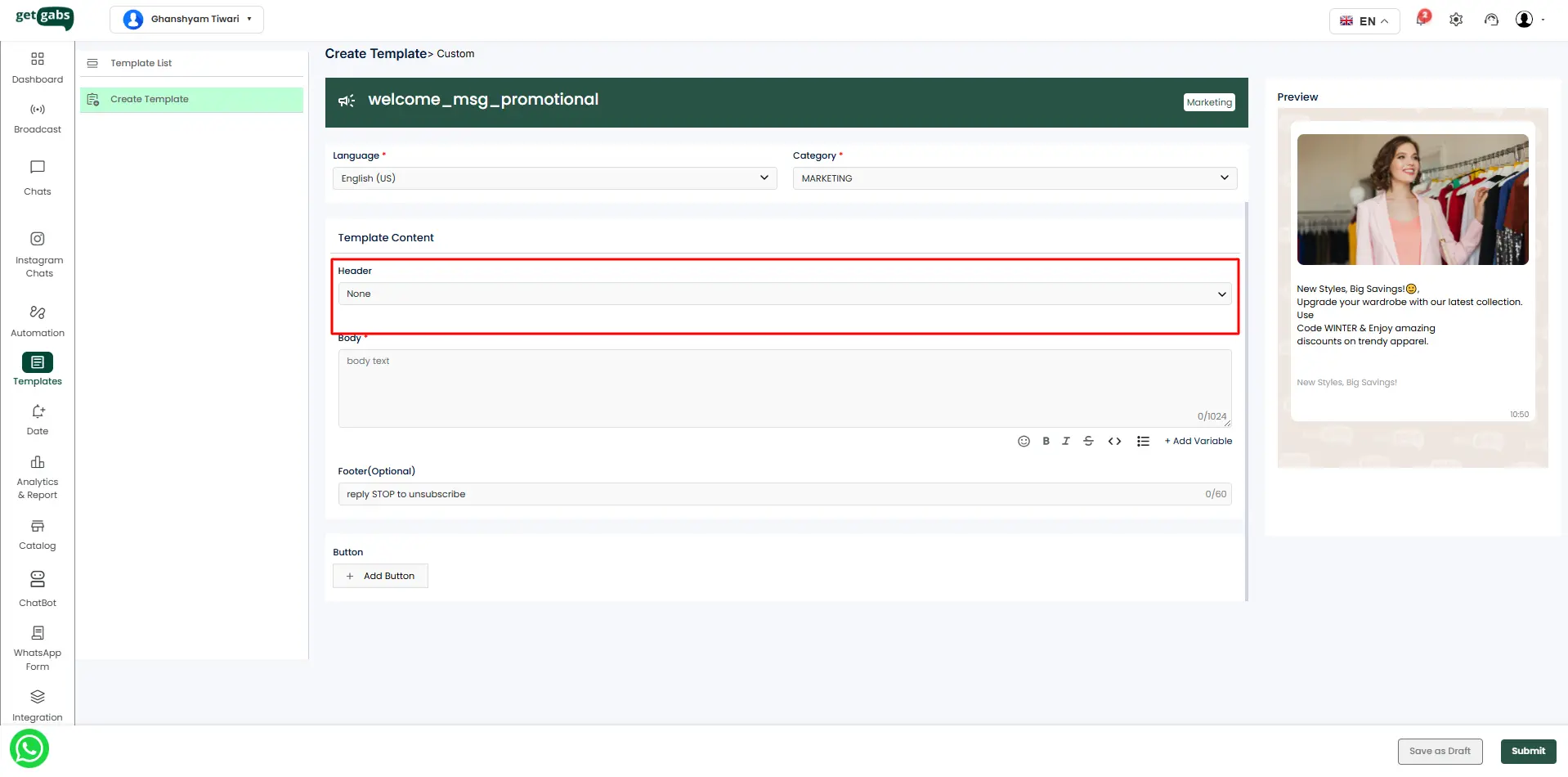
Step 5: Now you can choose to either leave the header none or add text (up to 60 characters) or an image (up to 5 MB) or a video (up to 16 MB), or a Document (up to 100 MB). You cannot just send images; you must add text along with the images, videos, or files you want to send.
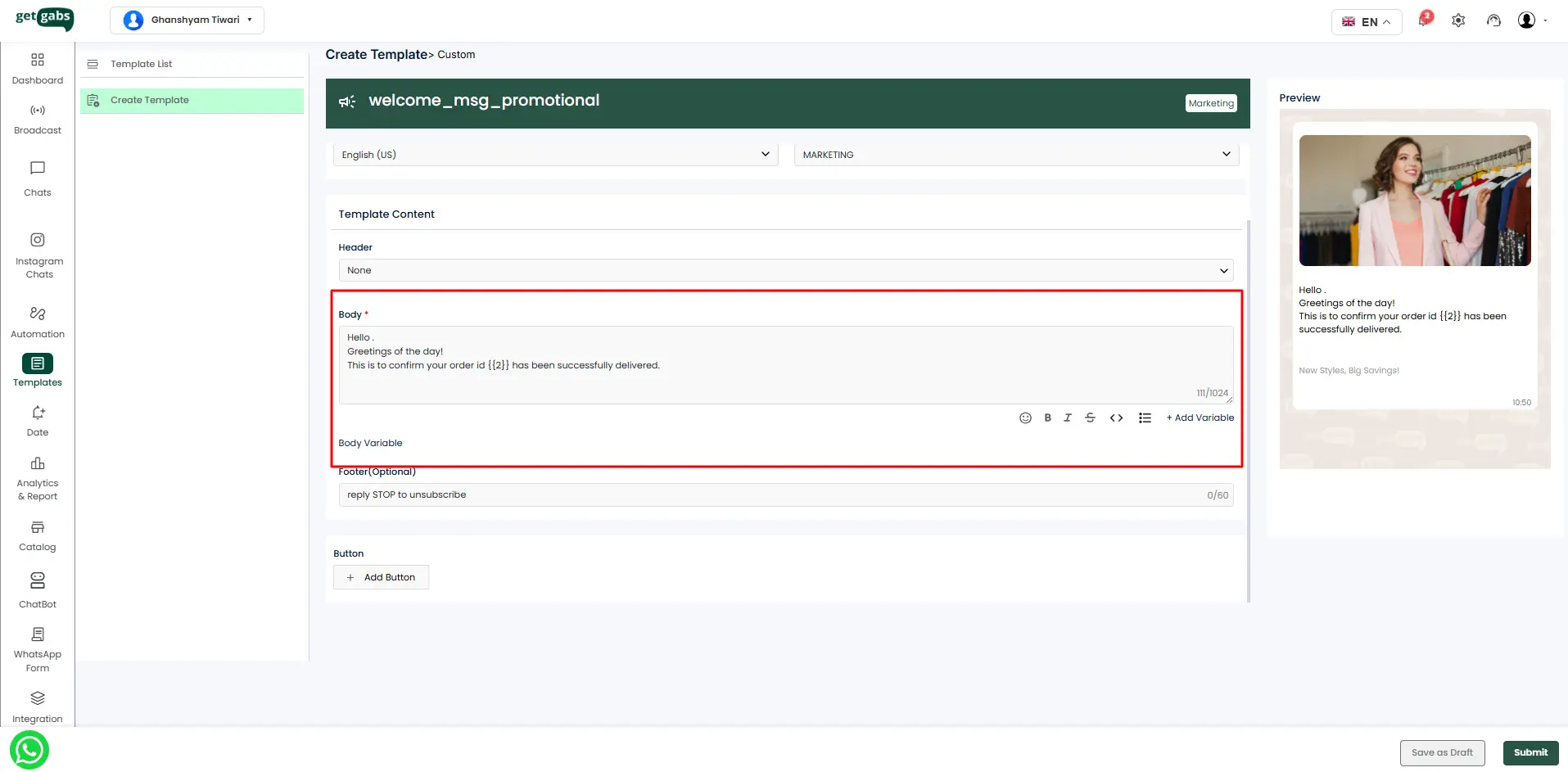
Step 6: It is time to add body text content. You can add content up to a 1024-character limit. The interesting part is, you can add dynamic values in the content by adding {{1}}, {{2}}, {{3}}, and so on to use it as a dynamic name, OTP, order id, payment link, track order link, userid, etc.
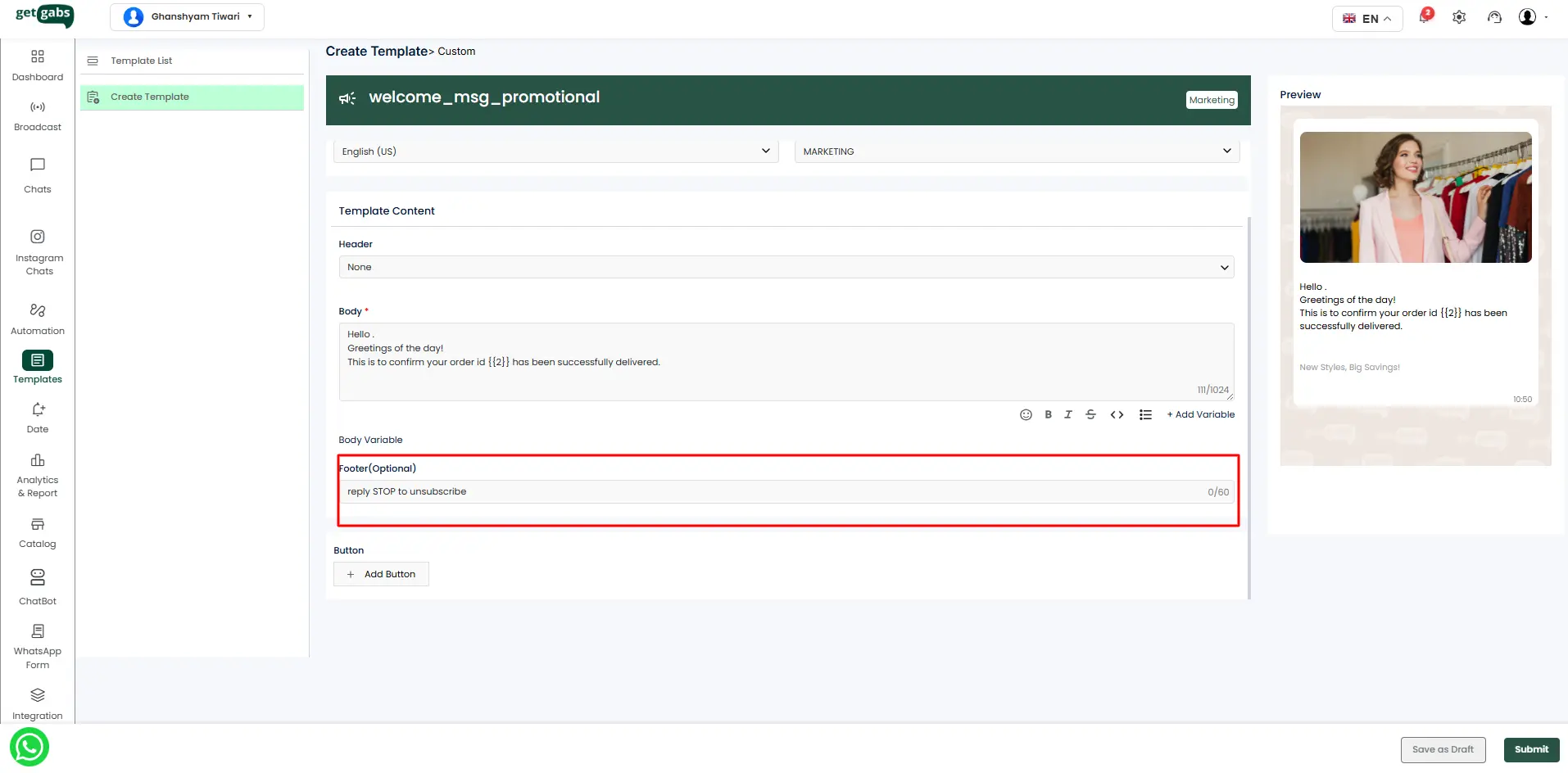
Step 7: You can also add a Footer to your template message. The most common purpose of a footer is to add an opt-out message to offer the receiver a way to stop receiving the messages on WhatsApp from your official WhatsApp number and protect you from being marked as spam.
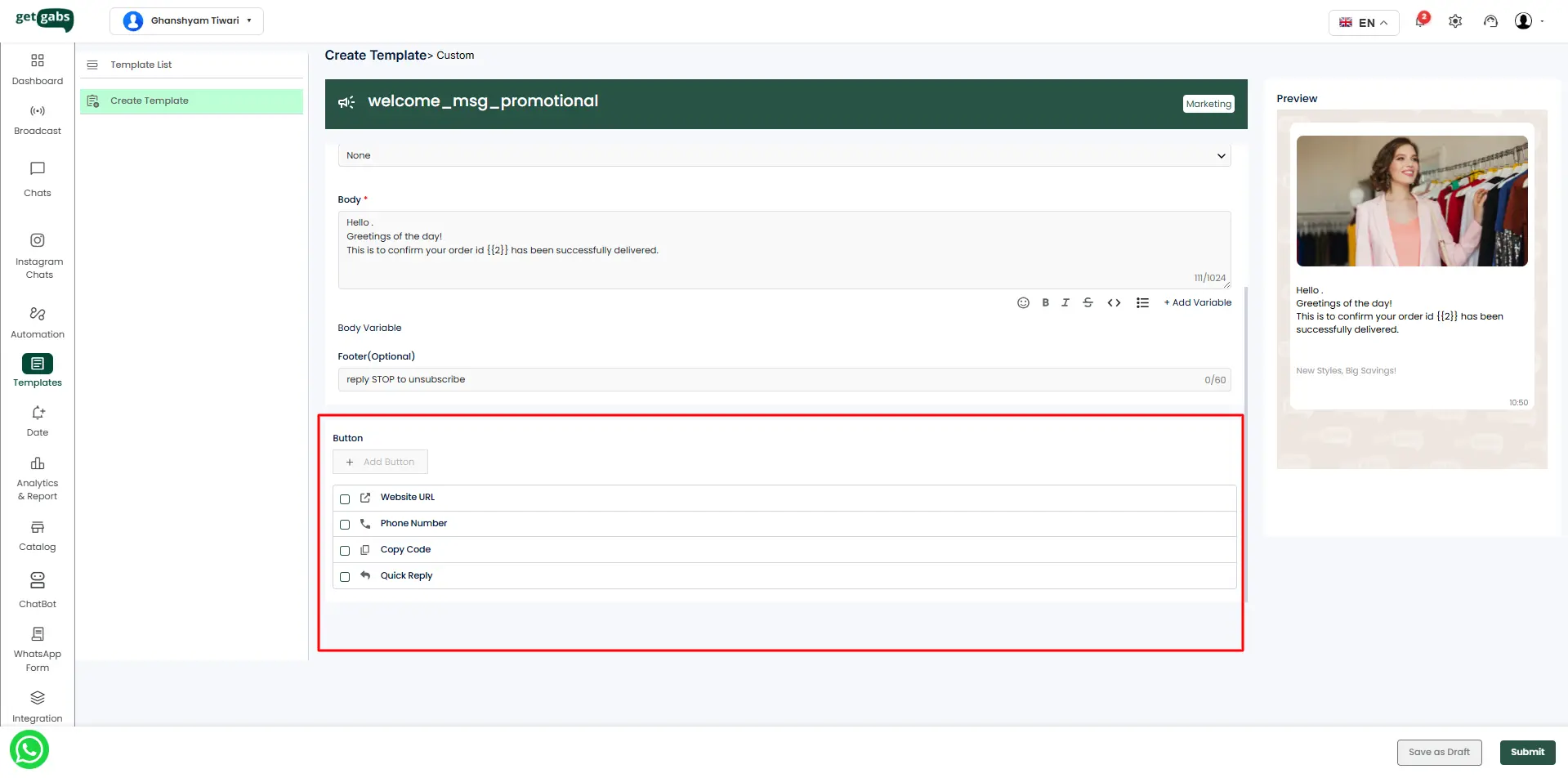
Step 8: Now, you will have to set up the CTA buttons to make your message template interactive. This is completely optional, but we highly recommend adding a Website URL or Quick Replies to drive more conversions. A template message can have a Website URL or a Phone Number, or both. Also, you can add multiple quick replies up to 20 20-character limit each.
Note: Templates composed of 4 or more buttons, or a quick reply button and one or more buttons of another type, cannot be viewed on WhatsApp desktop clients. However, it will be visible on mobile.
Finally, proofread the template message before clicking the submit button. Once submitted, you can’t make any changes to the same WhatsApp Template Message.
According to Meta, a WhatsApp Business Account can create 100 message templates per hour.
Your template message can have any of the statuses like Approved, Pending, or Rejected. You can check the status by clicking on Template List from the left side panel. Generally, approval takes 1-5 seconds. However, sometimes it takes a longer time, like 1-2 hours. It is totally up to Meta to give approval for a template message.
Hurray, your template message is ready to send.